
License plates with antique and historic status offer Delaware vehicle owners a way to connect older vehicles with the state’s long-standing registration traditions. These plate types are associated with qualifying older vehicles and may follow different registration rules from standard passenger plates. Delaware antique and historic plates can feature distinctive number formats, designs, and eligibility requirements that reflect a vehicle’s age and status. Knowing the requirements, registration process, permitted use, and plate characteristics can help owners determine which option fits their qualifying vehicle.
License plates for antique and historic vehicles serve a specific purpose within Delaware’s vehicle registration system. Owners of qualifying vehicles may need to meet age, condition, ownership, and usage requirements before applying for the appropriate plate category. Historic plates can carry particular significance for collectors and owners who maintain older automobiles, trucks, or other eligible vehicles. Reviewing Delaware DMV requirements, permitted vehicle use, registration details, and plate restrictions gives vehicle owners a clearer picture of how antique and historic registration works and what documentation may be required.
How to Register an Antique Vehicle in Delaware
Registering an antique vehicle in Delaware involves confirming ownership, completing the required inspection, requesting antique status, and paying the applicable fees. A vehicle owner who wants Delaware License plates vehicle registration should have the vehicle’s Delaware certificate of title available before starting the process. The Delaware DMV uses the vehicle’s title, inspection results, and antique status request to determine whether the vehicle qualifies for antique registration. Once the application is processed, the owner can receive information about the Delaware antique plate and the registration requirements that apply to the vehicle.
- Official Delaware DMV page:
- https://dmv.de.gov/VehicleServices/titles/index.shtml?dc=ve_title_antique
Official Delaware DMV Antique Vehicle Information
The official Delaware DMV page provides the requirements and procedures related to registering an antique vehicle in Delaware:
- Delaware Certificate of Title: The vehicle owner must have the appropriate Delaware certificate of title for the vehicle.
- Antique Vehicle Eligibility: The vehicle must meet Delaware DMV requirements for antique status, including the applicable age requirement.
- Initial Inspection: The vehicle must be presented for an initial inspection as part of the antique status application.
- 90-Day Inspection Requirement: The Delaware DMV states that the vehicle must pass inspection within 90 days of the initial application for antique status.
- Antique Status: After meeting the applicable requirements, the owner can request antique status for the vehicle.
- Antique Status Fee: The DMV page provides information about the fee required to obtain antique status.
- Title Fee: An applicable certificate of title fee may be required as part of the transaction.
- Delaware Antique Plate: Once the vehicle qualifies for antique status, the owner can follow the DMV procedure for obtaining the applicable antique license plate.
- Registration Information: The DMV provides information about the registration process and requirements that apply to qualifying antique vehicles.
- Exempt Validation Sticker: A qualifying antique vehicle receives information regarding the exempt validation sticker associated with its antique registration.
- Official DMV Source: This page is an official Delaware DMV resource, making it a suitable reference for current antique vehicle registration requirements, fees, inspection rules, and plate information.
What Do Delaware Antique License Plates Look Like?
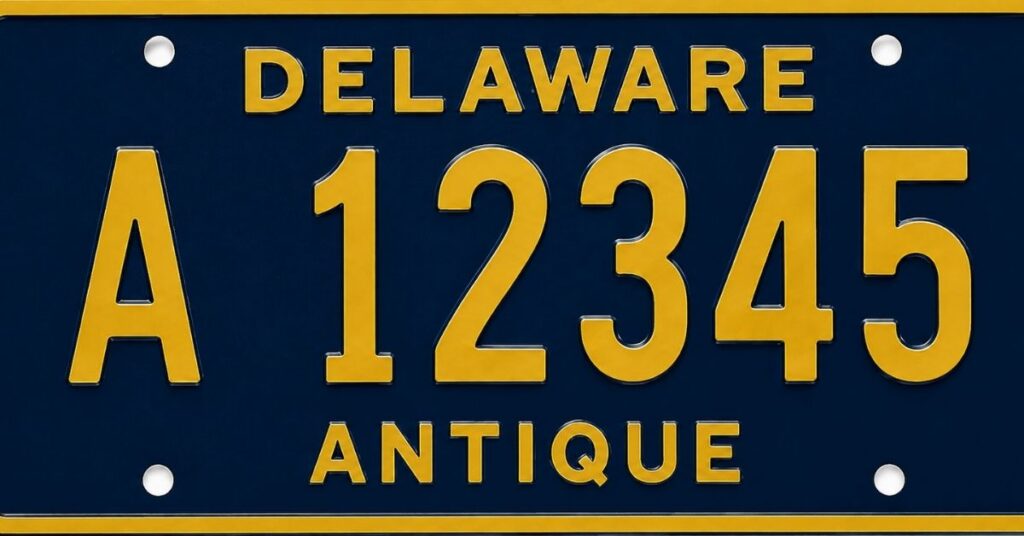
A Delaware antique license plate has a distinctive appearance that separates it from a standard passenger vehicle number plate. The Delaware DMV provides separate plate examples for antique automobiles and antique motorcycles, reflecting the different vehicle types. An antique automobile plate is intended for an eligible antique automobile, while an antique motorcycle plate is associated with an eligible antique motorcycle. The plate design, number format, and physical appearance can vary according to the applicable plate category.
Delaware Antique Plate Eligibility Requirements
Delaware antique plate eligibility is based on specific requirements set by the Delaware DMV. A vehicle owner seeking antique status must meet the applicable age, title, inspection, and vehicle requirements before an antique plate can be issued. Under the Delaware DMV procedure, the vehicle must be 25 model years or older to qualify for antique status. The vehicle must have the required certificate of title and pass the initial DMV inspection. These requirements help establish that the vehicle qualifies for Delaware antique historic plates rather than standard registration.
Certificate of Title
A valid certificate of title is an important part of the antique vehicle eligibility process. The title identifies the vehicle and establishes ownership. The vehicle owner should have the required Delaware title documentation available when applying for antique status. Any title issue that affects ownership or vehicle identification may need to be resolved as part of the DMV transaction.
25 Model Years or Older
The primary age requirement for Delaware antique plate eligibility is 25 model years or older. The model year is used by the Delaware DMV when determining whether a vehicle can qualify for antique status. A vehicle that does not meet the 25-model-year threshold does not qualify under the antique vehicle procedure based on age alone.
Initial DMV Inspection
An initial vehicle inspection is required when applying for antique status. The inspection allows the Delaware DMV to examine the vehicle as part of the qualification process. The DMV procedure states that the vehicle must pass inspection within 90 days of the initial application for antique status. Owners should account for this inspection period when submitting their application.
Vehicle Condition and Antique Status
Age alone does not complete the antique status process. The vehicle must meet the applicable DMV requirements and pass the required inspection. Owners should present the vehicle in a condition that allows the DMV to complete its inspection and verify the vehicle information.
No Weight Restriction in the DMV Procedure
The Delaware DMV antique vehicle procedure does not list a weight restriction as a condition for antique status. This means the stated eligibility requirements focus on factors such as model year, title, inspection, and the type of vehicle rather than a specific weight limit.
Trailers Are Not Eligible
Trailers are excluded from Delaware antique status under the DMV procedure. A trailer cannot receive antique status under the same antique vehicle classification, even when its age meets the 25-model-year threshold.
Ownership and Registration
The vehicle owner must provide the required ownership and title documentation and complete the DMV process for antique status. Once the requirements are met, the vehicle can proceed through the applicable registration and Delaware antique plate process.
Does a Delaware Antique Vehicle Need an Inspection?
A Delaware antique vehicle does require an inspection when the owner first applies for antique status. The Delaware antique vehicle inspection is part of the process used by the Delaware DMV to determine whether the vehicle qualifies for antique registration. After the vehicle receives qualifying antique status, it is exempt from the regular inspection requirements that apply to many other registered vehicles. This makes the initial inspection an important step for owners seeking an antique plate, while qualifying antique vehicles do not need to return for the same annual inspection process.
Initial Antique Vehicle Inspection
- The initial inspection is required when applying for Delaware antique status.
- The vehicle owner must present the vehicle for inspection as part of the antique-status application.
- The Delaware DMV uses the inspection to help determine whether the vehicle meets the requirements for antique registration.
- The vehicle must pass the inspection within 90 days of the initial application for antique status.
- Completing the inspection within this period allows the antique-status application to continue.
Are Antique Vehicles Exempt From Annual Inspection?
- Yes. Once a vehicle qualifies for antique status, it is exempt from further inspection requirements under the Delaware antique vehicle procedure.
- A qualifying antique vehicle does not require the regular annual inspection that applies to standard registered vehicles.
- The inspection exemption applies after the vehicle completes the initial inspection and receives antique status.
- The initial inspection should be treated separately from the regular inspection requirements for other registered vehicles.
Exempt Validation Sticker
- Qualifying antique vehicles receive an exempt validation sticker associated with their antique registration.
- The sticker indicates that the vehicle has the applicable inspection exemption.
- The key point is that an initial inspection is required for antique status, but a qualifying antique vehicle is exempt from regular inspections afterward.
What Are the Driving Restrictions for Antique Vehicles?
Delaware antique vehicle restrictions apply to how a vehicle with antique status may be used on public roads. Antique registration is intended for vehicles maintained or restored as collector vehicles, rather than vehicles used for everyday transportation. A vehicle owner with Delaware antique plates must follow the use limits connected with antique registration. Delaware law permits qualifying antique vehicles to be driven for specific activities such as club activities, exhibits, tours, parades, and similar special events. These limits are important for anyone considering antique registration in Delaware.
Antique Vehicles Are Not for General Transportation
Antique vehicle use in Delaware is not intended for general transportation. An owner should not treat an antique-registered vehicle like a standard passenger vehicle used for routine commuting, errands, or other ordinary transportation. The purpose of antique registration is connected with preserving and using older vehicles as collector vehicles. The restrictions help distinguish an antique vehicle from an ordinary vehicle that is registered for regular transportation.
Permitted Uses for Delaware Antique Vehicles
Delaware law permits qualifying antique vehicles to be used for certain activities, including:
- Club activities: Antique vehicles may be driven for activities associated with recognized vehicle clubs.
- Exhibits: Owners may use antique vehicles when participating in vehicle exhibits or displays.
- Tours: Antique vehicles may be operated during organized tours involving collector or historic vehicles.
- Parades: Antique vehicles may be driven as part of parades and similar organized events.
- Similar activities: Other comparable activities connected with the display, preservation, or organized use of antique vehicles may fall within the permitted purposes.
What This Means for Antique Plate Owners
Having Delaware antique plates does not give the vehicle the same unrestricted road use as ordinary registration. The owner needs to keep the permitted-use restrictions in mind when operating the vehicle. For a collector, antique registration can be suitable when the vehicle is primarily maintained for shows, club events, tours, parades, and similar purposes. Someone seeking registration for daily commuting or routine transportation should review the standard Delaware registration options instead of assuming antique status permits unrestricted use.
Delaware Historic Plates vs. Antique Plates
A Delaware historic plate and a Delaware antique plate can sound like the same thing, but they serve different purposes. An antique plate is connected to the registration status of an eligible antique vehicle, whereas a historic plate can refer to a reproduction of an older Delaware plate design. This distinction matters for owners of a classic vehicle, historic vehicle, or older automobile who are searching for Delaware antique historic plates. The plate’s appearance does not by itself determine whether the vehicle qualifies for antique registration.
How Much Do Delaware Antique Plates Cost?
The Delaware antique plate cost depends on the type of antique plate and the registration requirements that apply to the vehicle. Antique vehicles follow a different registration process from standard passenger vehicles, and the plate is issued as part of the vehicle’s antique status. The total amount can vary based on the specific transaction, plate requirements, and whether additional title or replacement services are needed. For the most current amount, vehicle owners should check the Delaware DMV’s current antique vehicle information before applying.
For a vehicle being placed into antique status, the practical DMV fee breakdown is:
| Fee Type | Amount |
|---|---|
| Antique Status | $25 |
| Title without Lien | $35 |
| Title with Lien | $55 |
| Registration Fee | $0 |
| Duplicate Antique Plate | $5 |
Old License Plates and Their Historical Significance
Old license plates provide a visible record of Delaware’s vehicle registration history. The state’s DMV records show that Delaware began issuing matched porcelain plates in 1909, with white characters on a black background. From 1910 through 1915, the state continued using porcelain plates with different background and character colors. In 1916, Delaware changed from porcelain to painted embossed steel plates, marking an important change in plate production.
Changes in Delaware Historic Plate Materials
The material used for Delaware historic plates changed over time. Steel remained common through the following decades, with different colors and designs appearing in various years. The DMV’s historical records list plate materials, colors, and designs from 1909 through 1941. This record makes older Delaware plates useful to collectors who are interested in the state’s vehicle and manufacturing history.
Delaware License Plates in 1941
The year 1941 is another significant point in Delaware plate history. The state introduced recognizable white-on-black porcelain plates with slots for date tabs. These plates became closely associated with Delaware’s distinctive plate appearance. Later, porcelain plates were replaced by black painted stainless-steel plates, followed by other plate styles and materials. This evolution also provides useful historical context for Delaware License Plate Replacement as plate materials and designs have changed significantly over the years.
Reproductions of Historic Delaware Plates
Some historic designs exist today as reproductions. The Delaware DMV states that black-and-white porcelain or stainless-steel plates registered to vehicles can be obtained through the Delaware Historic Plate Company, with qualifying plates available through DMV locations.
Collecting Old Delaware License Plates
For collectors, the value of an old Delaware plate can relate to its age, material, design, condition, and rarity. A genuine historical plate and a modern reproduction may look similar, so the plate’s production details can matter when identifying an older example.
Antique & Historic Plates for Collectors
Collectors often show interest in old license plates because they preserve details about Delaware’s vehicle registration history, materials, and plate design. Delaware historic plates can represent earlier styles through original surviving plates or modern reproductions. Features such as the plate’s year, material, lettering, number format, condition, and design can help distinguish one historical example from another.
Original Plates and Reproductions
An original historical plate is an older plate produced during the period it represents. A reproduction recreates an earlier plate design using newer materials or production methods. The two can have similar visual features, so details such as construction, surface condition, markings, and production characteristics can be relevant to collectors. Reproductions can still have historical interest, but they should not be presented as original plates.
Antique Vehicle Plate Interest
An antique vehicle can add another area of interest for collectors. The vehicle’s age, condition, restoration work, and registration status can provide context for its plate. A restored vehicle may display a plate associated with its registration category, while a historical plate may represent a particular period of Delaware plate history. Collectors may focus on particular materials, years, number formats, or designs. Porcelain, steel, and stainless-steel examples each represent different periods of Delaware plate production. For collectors, the historical context and authenticity of an old plate can be as significant as its visual appearance.
Frequently Asked Questions
Delaware antique and historic plates, including vehicle age requirements, antique status, inspection, permitted use, modified vehicles, and the difference between antique and historic plates. These answers provide quick information for vehicle owners researching Delaware’s antique vehicle registration requirements and historical plate options.
How old does a vehicle have to be for antique plates in Delaware?
A vehicle generally needs to be at least 25 model years old to qualify for Delaware antique vehicle status. The vehicle must meet the other applicable antique registration requirements before an antique plate can be issued.
What is the age requirement for a Delaware antique vehicle?
Delaware uses a 25-model-year threshold for antique vehicle eligibility. Age alone does not establish antique status; the vehicle must meet the applicable DMV requirements for antique registration.
Can a modified vehicle qualify for Delaware antique status?
A modified vehicle may have different eligibility considerations depending on the nature of the modifications. Changes to the vehicle can affect whether it meets Delaware’s requirements for antique status. The specific vehicle and its modifications should be reviewed under the current DMV requirements.
Can I use a Delaware antique vehicle as my daily driver?
Antique vehicle registration has restrictions on vehicle use. An antique vehicle is not treated the same as an ordinary passenger vehicle for unrestricted daily transportation. Owners should follow the use limitations that apply to Delaware antique registration.
Does a Delaware antique vehicle need inspection?
Yes. An initial inspection is part of the Delaware antique vehicle registration process. This inspection helps establish that the vehicle meets the requirements for antique registration before the status is issued.